
Concrete 3D Printing on Site: Where It Pays Off and Where It Doesn’t
Printing with concrete removes formwork and enables complex geometry, but reinforcement, material control and quality assurance decide whether it pays off.
ByPremesh Engineering Team· Engineering
Published 1 min read
Key takeaways
- The strongest cases are complex geometry and low repetition, where formwork is the dominant cost.
- Material behaviour (pumpability, buildability, open time) must be controlled and tested, not assumed.
- Reinforcement and structural approval are the main constraints, so involve the engineer of record early.
- High-volume, repetitive elements are usually still cheaper with conventional methods.
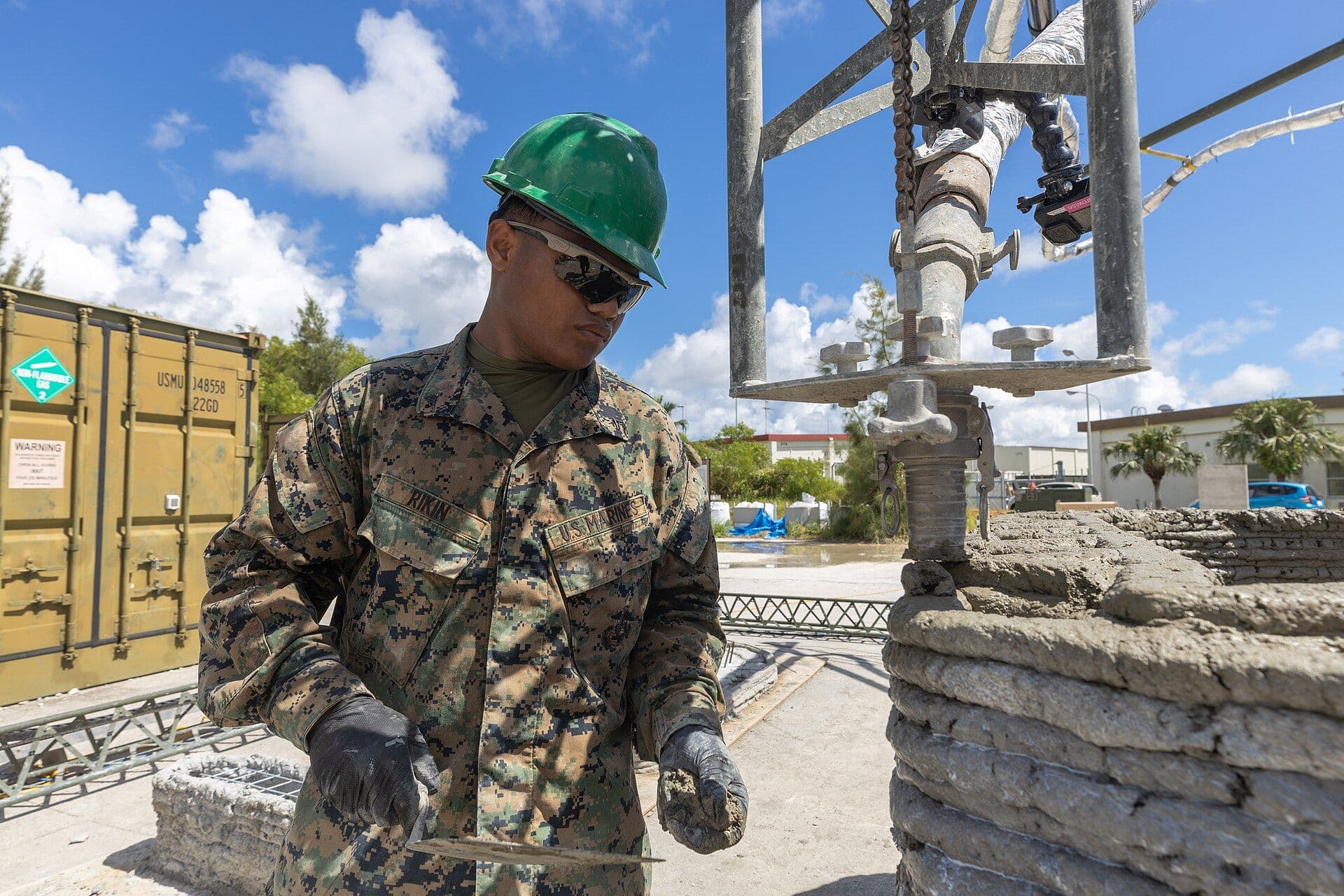
Concrete 3D printing deposits cementitious material layer by layer under computer control. The marketing often focuses on speed. The real economics usually turn on something else: formwork.
Where it pays off
- Complex or curved geometry. Conventional formwork for double-curved shapes is expensive and wasteful. Printing makes geometry cheap.
- Low repetition. One-off or small-batch elements, such as architectural features, planters, bespoke drainage structures and custom formwork itself, avoid tooling costs.
- Constrained programmes. Fabricating parts on demand can remove lead times for hard-to-source components.
Where it struggles
- Reinforcement. Printed layers do not automatically include steel. Approaches such as printing around reinforcement, inserting it afterwards, or using printed permanent formwork each add steps and need engineering approval.
- Repetitive, high-volume parts. Precast and conventional formwork amortise well over many identical units.
- Weather and site conditions. Temperature, wind and humidity affect open time and curing, so process control matters more outdoors.
Material control is the process
A print mix has to be pumpable, extrudable and then stiff enough to carry the layers above it. Those properties change with temperature, batch variation and time. Good projects define acceptance tests for fresh and hardened properties, record batch and environmental data, and print test specimens alongside the work.
Quality assurance and approval
Agree the design basis, testing regime and inspection points with the engineer of record and the relevant authority before printing structural elements. Standards bodies such as ASTM are developing terminology and specifications for additive manufacturing; check which documents apply to your project.
A sensible way to start
Begin with a non-critical element where the geometry benefit is clear, such as custom formwork or a non-structural feature. Measure cost and time against the conventional alternative, document the QA process, and use that evidence to decide on structural applications.
References & further reading
- ASTM International: Additive manufacturing standards — ASTM International
Editorial note: General guidance only: always follow your project engineer of record and local regulations. Draft prepared with AI assistance and pending technical review by a Premesh engineer.
- #3D printing
- #Additive manufacturing
- #Formwork